
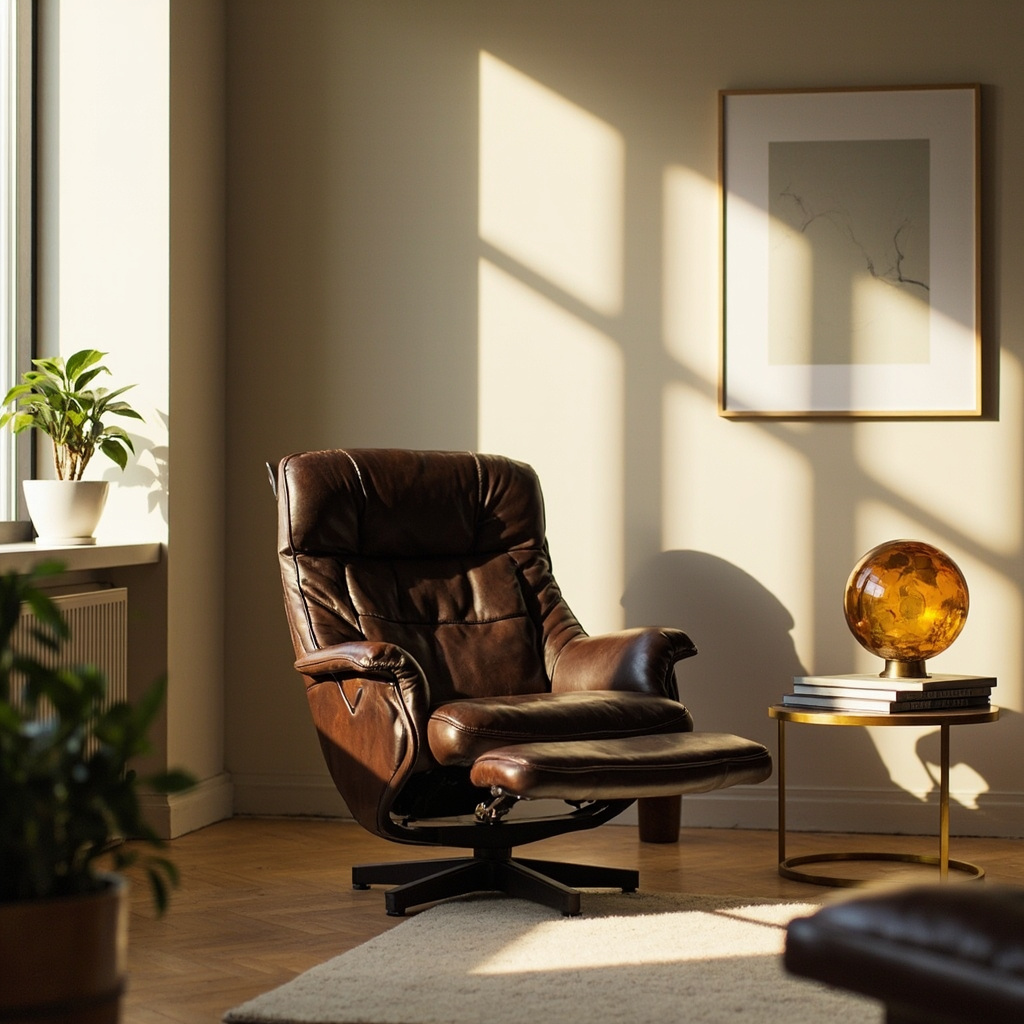
Most recliner buyers walk into a furniture store, sit in two or three chairs, and pick one that feels comfortable. The problem is that comfort on a 30-second test doesn’t predict how the chair will feel after two hours of TV or a full afternoon of reading. After researching 40+ recliners, we found that the buyers who are happiest with their choice a year later are the ones who started by understanding how to choose a recliner based on type, material, and room fit — not just initial comfort.
If you are also shopping for other living room furniture, our coffee table buying guide and sofa guide cover the full room setup.
This guide covers what actually matters: recliner types, sizing, materials, and the specific mistakes that lead to returns. Learning how to choose a recliner the right way saves you from the costly mistake of ordering the wrong size or mechanism type.
Why Recliner Type Matters Most
The single biggest factor in choosing the right recliner is the type of reclining mechanism. This determines how the chair operates, who can use it comfortably, and how much floor space it requires.
Manual Recliners — Simple and Affordable
Manual recliners use a lever or push-back mechanism. You pull a lever on the side, and the footrest extends while the back tilts back. There are no motors, no cords, and no charging requirements.
Manual recliners are the lightest option (50-80 lbs), making them easy to move and ideal for renters. They also tend to be the most compact when fully reclined. The trade-off is that you need some leg strength to close the footrest, and the recline angle is fixed — you can’t stop at a custom position. For anyone wondering how to choose a recliner on a budget, a manual model is the most cost-effective starting point.
Check Price on Homall PU Leather Manual Recliner on Amazon →
Power Recliners — Push-Button Convenience
Power recliners use an electric motor controlled by a button on the armrest. Press once to extend the footrest, press again to recline the back. Some models offer infinite positioning — you stop the motor at any angle you prefer. When you are deciding how to choose a recliner for daily use, power models offer the best long-term comfort because you can adjust your position throughout the day.
The main advantage is effort-free operation. If anyone in your household has limited mobility, arthritis, or simply prefers not to use physical force, a power recliner is worth the extra cost. Most power recliners also include USB charging ports in the armrest, which is convenient for phone and tablet users.
Check Price on CANMOV Electric Power Recliner on Amazon →
Power Lift Recliners — Stand Up with Ease
Power lift recliners include a lifting mechanism that tilts the entire chair forward to help the user stand from a seated position. This is specifically designed for elderly users, people recovering from surgery, or anyone who finds it difficult to rise from low seating. A key question in how to choose a recliner for seniors is whether a lift mechanism is necessary — if standing from seated position is difficult, the answer is yes.
These are the heaviest and most expensive recliners (80-120 lbs), but the lift function is life-changing for users with mobility challenges. Most models also include massage and heat functions in the back and seat. See our full comparison of power lift recliners for tested recommendations.
Check Price on MCombo Power Lift Recliner on Amazon →
Wall-Hugger Recliners — Space-Saving Design
Wall-hugger (or zero-wall) recliners are designed to fully recline while requiring only 3-5 inches of clearance between the chair back and the wall. Standard recliners need 12-18 inches. If your living room is tight on space or you want to place the recliner in a corner, this type is the practical choice. When you are figuring out how to choose a recliner for a small apartment, wall-huggers should be your first consideration.
The trade-off is a slightly different recline motion — the seat slides forward as it reclines rather than tilting back in place. This feels different from a standard recliner but most users adjust within a few days. See our wall-hugger recliner guide for specific model recommendations.
Key Factors to Consider Before Buying
Beyond the mechanism type, several other factors determine whether a recliner works for your body and room. For anyone researching how to choose a recliner, these details matter most.
Size and Weight Capacity
Recliner dimensions are measured in three states: upright, reclined, and with the footrest extended. A chair that fits neatly against your wall in upright position may extend 30+ inches further when fully reclined.
Check these measurements before buying:
- Seat width: 18-22 inches is standard. Wider seats (22+ inches) accommodate larger frames but may feel oversized for smaller users.
- Seat depth: 19-22 inches is typical. If you’re under 5 feet 4 inches, look for models under 20 inches deep. Taller users over 6 feet need 21+ inches for proper leg support.
- Weight capacity: Budget models support 250 lbs, mid-range 275-300 lbs, and heavy-duty models handle 350+ lbs. Always choose a model rated at least 20% above your body weight for longevity.
- Overall height: Recliners range from 38 to 45 inches tall. Check if the headrest aligns with your head when seated — a too-short headrest offers no neck support.
Material: Leather vs Fabric vs Faux Leather
| Best For | Material | Price Range | Durability |
|---|---|---|---|
| Easy cleaning, modern look | PU Leather | $100-$250 | 3-5 years |
| Color variety, comfort | Fabric | $150-$400 | 5-8 years |
| Long-term investment | Top-Grain Leather | $400-$800+ | 10-15 years |
| Pet-friendly, low cost | Textured Faux Leather | $100-$200 | 4-6 years |
PU leather (polyurethane) looks like real leather but costs far less. It wipes clean with a damp cloth, which is ideal for homes with kids. The downside is that it can crack or peel after several years of daily use, especially in hot or humid environments.
Fabric recliners feel warmer and offer hundreds of color and pattern options. Performance fabrics like microfiber and polyester blends resist stains and wear better than cotton or linen. The main drawback is that fabric absorbs odors and shows pet hair.
Check Price on CANMOV Manual Leather Recliner on Amazon →
Comfort Features
The features that actually affect daily comfort are not the luxury add-ons — they’re the structural elements.
Lumbar support: A built-in lumbar curve in the backrest prevents lower back fatigue during extended sitting. Budget recliners often lack this, using a flat back cushion instead. If you spend more than an hour at a time in your recliner, lumbar support matters.
Headrest height and angle: The headrest should support your neck without pushing your head forward. Adjustable headrests (found on power recliners) let you customize this. Fixed headrests work well if they align with your height.
Footrest extension: When extended, the footrest should support your full calf length without leaving your ankles dangling. If you’re over 6 feet tall, look for models with extended footrests. The MCombo Dual Motor recliner offers one of the longest footrests in this price range.
Check Price on MCombo Dual Motor Recliner on Amazon →
Room Size and Placement
Before ordering, measure three things: the wall space available, the doorway width (for delivery), and the distance from the recliner to the nearest coffee table or wall.
Space requirements by recliner type:
- Standard recliner: 12-18 inches wall clearance when reclined
- Wall-hugger: 3-5 inches wall clearance when reclined
- Power lift: 15-20 inches wall clearance (the lift mechanism needs space to tilt forward)
Also consider the room layout. A recliner needs clear space in front for the footrest — placing it directly in front of a coffee table less than 12 inches away will block the footrest from extending fully. See our recliner chair comparison for compact options suited to small apartments.
Common Recliner Mistakes to Avoid
Buying without measuring doorway width. This is the most common return reason. Measure the narrowest doorway or hallway the recliner must pass through. Most recliners have a removable back that reduces width by 8-12 inches, but some models ship fully assembled.
Choosing the wrong material for pets or kids. Real leather scratches easily from cat claws. Fabric absorbs spills. PU leather is the safest middle ground for busy households — it resists scratches better than leather and wipes clean faster than fabric.
Ignoring weight capacity. Exceeding the rated weight capacity by even 10-20% stresses the frame, mechanisms, and foam. Over time, this causes the recline angle to become uneven and the footrest to sag.
Forgetting to check recline depth. A recliner that extends 30+ inches from the wall when fully reclined will block traffic flow in narrow rooms. Always check the fully reclined dimensions, not just the upright measurements.
Not considering who else will use the recliner. If multiple family members will share the chair, factor in different body sizes and mobility levels. A recliner that fits a 6-foot user perfectly may be uncomfortable for a 5-foot-2 user. Adjustable headrests and multiple recline positions help accommodate different users.
Overlooking delivery logistics. Recliners weigh 50-120 lbs. If your front door opens to a narrow hallway or you live on an upper floor without an elevator, check whether the recliner ships in one box or requires assembly on-site.
How to Measure for a Recliner
The most critical part of how to choose a recliner is getting the measurements right. A comfortable chair that doesn’t fit your room or body is useless.
- Your body: Measure from the floor to the back of your knee (for seat height) and from your tailbone to the back of your knee (for seat depth). These numbers determine the ideal seat dimensions.
- Wall clearance: Measure from the wall to where you want the recliner positioned, then add the recline depth requirement for your chosen type.
- Doorway width: Measure the narrowest point. Most recliners are 28-34 inches wide. Removable-back models reduce this to 18-22 inches for the base section.
- Footrest extension length: When fully extended, the footrest adds 18-28 inches to the front of the chair. Ensure this doesn’t block walkways or intersect with other furniture.
For a detailed comparison of tested models with exact dimensions, see our best recliners guide. You can also explore reading chairs and office chairs for seated comfort alternatives.
Frequently Asked Questions
How much should a good recliner cost?
Budget manual recliners ($100-$180) work for occasional use. Mid-range power recliners ($200-$400) add convenience and better materials. Premium models ($400+) use genuine leather and dual motors. For most buyers, $200-$350 hits the best balance of comfort and durability.
What recliner type is best for a small apartment?
A wall-hugger recliner is the best choice for apartments under 800 square feet. These models need only 3-5 inches of wall clearance when fully reclined, compared to 12-18 inches for standard recliners. Compact manual recliners under 30 inches wide also work well in small spaces.
Should I buy a manual or power recliner?
If you have full mobility and want the lowest price, a manual recliner is sufficient. If you prefer push-button convenience, want USB charging ports, or have any difficulty with leg strength, a power recliner is worth the $50-150 premium. Power lift models are recommended for elderly users or anyone recovering from knee or hip surgery.
What size recliner do I need for my height?
Under 5 feet 4 inches: look for a seat depth under 20 inches and a compact recliner under 30 inches wide. Between 5 feet 4 inches and 6 feet: most standard recliners fit well. Over 6 feet: choose models with extended footrests (22+ inches) and adjustable headrests to support your full height.
Can a recliner fit through a 30-inch doorway?
Most recliners have a removable back that reduces the width to 18-24 inches for delivery. Always check the product specifications before ordering. If the recliner ships fully assembled and the box is wider than your narrowest doorway, you will need to unpack it outside and carry the base section through separately.